Operating CW on the HF bands

G5VZ in 2026

Amateur radio has been a feature of my life since I was about 12 years old.

In the beginning I was able to enjoy Solar Cycle 20 and, just recently, I have been enjoying what Cycle 25 has to offer. Back then, I spent so much time SWLing and soaking up knowledge in the shack with Bill 5, G5VZ, the first holder of this call. It was first issued to Bill in 1933 and, having been suspended for the duration of WW2, reissued in 1946.

Just up the road, and on the other side of Park Avenue from Bill, lived Keith, G3OXH (SK) and I was at school with Richard, the son of Bob, G3ORC (SK). It was Bob, who had served as a RN telegraphist, who began my enthusiasm for Morse keys, for Morse, for CW.

Using an Intrepid bug Morse key

Bugs

The semi-automatic Morse key
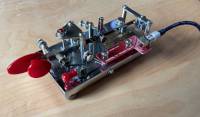
Semi-automatic Morse bug key

The bug key, more properly called a semi-automatic Morse key, is a classic of engineering. It is a mechanical telegraph instrument that automatically generates strings of dits using a vibrating pendulum. That's the dots. The dahs need the operator to manually key them. The bug was invented in the early 1900s and revolutionized telegraphy by increasing sending speeds and accuracy, while helping to prevent repetitive strain injury, often known as glass arm.
Operating

CW and Morse

Morse is often considered our first mode - and CW is the civilised way to send it. (Not spark gap!) Using CW on the air is, contrary to many forecasts, now gaining popularity. And it certainly gets through.

Station

The Station Today

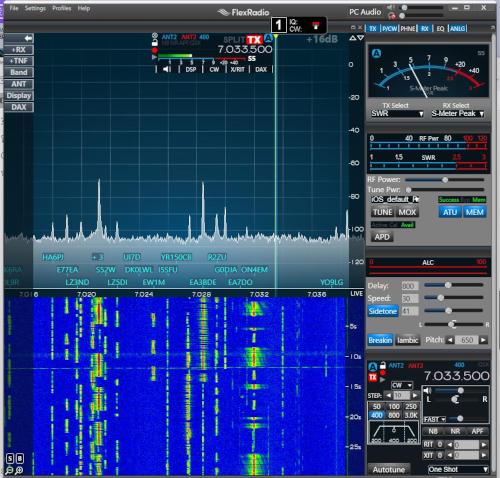
FlexRadio SmartSDR screen display

Operations at G5VZ are based around a FlexRadio 8400. The radio has an internal ATU and runs 100W. I have verticals for 30m through to 17m, a wire that manages on 160m TO 40m, and a halo for 4m.

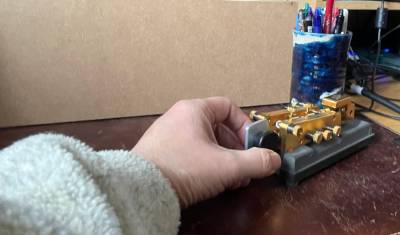
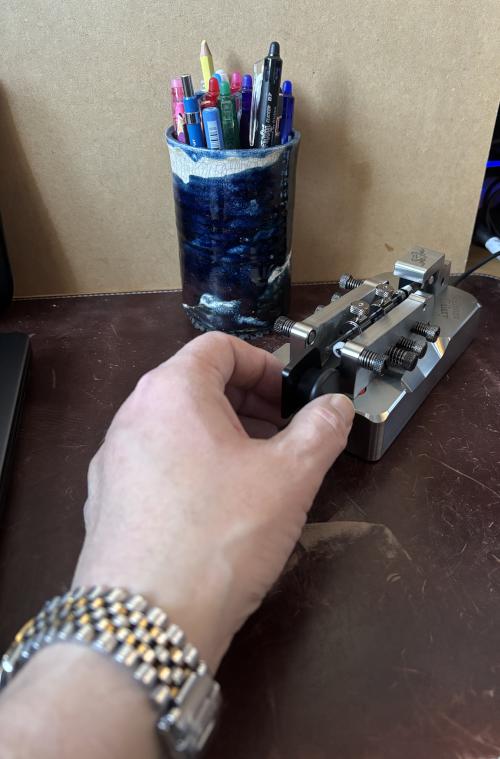
Begali Galaxy bug key in use on the desk
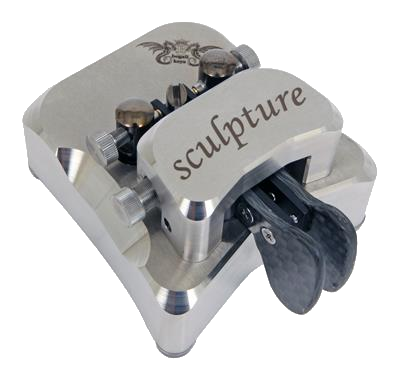
Begali Sculpture paddle

Always on the desktop these days is a Begali Galaxy bug, and a second Begali key, a Sculpture paddle.

Clubs: the heart of amateur radio

Clubs and societies

The radio club has been a central feature of amateur radio since its very first days. Local clubs, national clubs and societies, and international groups are all important, each in their own way.

A radio club matters, turning an often solitary technical hobby into a living community where knowledge, skills and friendship are passed from one generation of amateurs to the next. Larger organisations like RSGB, ARRL and DARC represent amateurs and amateur radio to authorities, governments and international bodies.

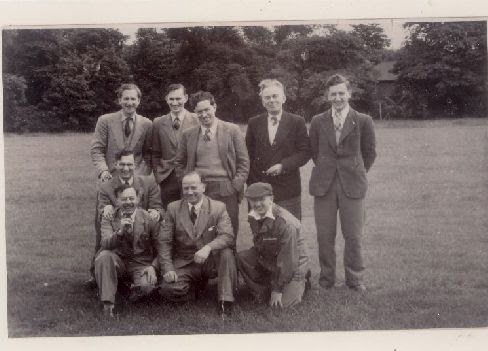
Historic amateur radio club group photograph
After World War Two, Pontefract and District Amateur Radio Club began meeting in Halfpenny Lane, Pontefract